Anthropic Research Discloses Cryptographic Origins of ECDSA Curves
Executive Summary
"For over two decades, the mysterious seeds behind NIST's standardized ECDSA parameters fueled widespread fears of hidden NSA backdoors in core internet cryptography. In a staggering breakthrough, Anthropic revealed that its Claude AI model demystified these quarter-century-old constants in under thirty minutes."
For over two decades, cryptographers harbored deep suspicions about the true origins of the Elliptic Curve Digital Signature Algorithm (ECDSA) parameters standardized by NIST. The National Security Agency provided arbitrary "seed" values in the late 1990s without explaining where they came from, stoking persistent fears of engineered backdoors. Anthropic revealed that its AI model, Claude, systematically unraveled the quarter-century-old mystery in less than thirty minutes.
The Unix Timestamp Breakthrough
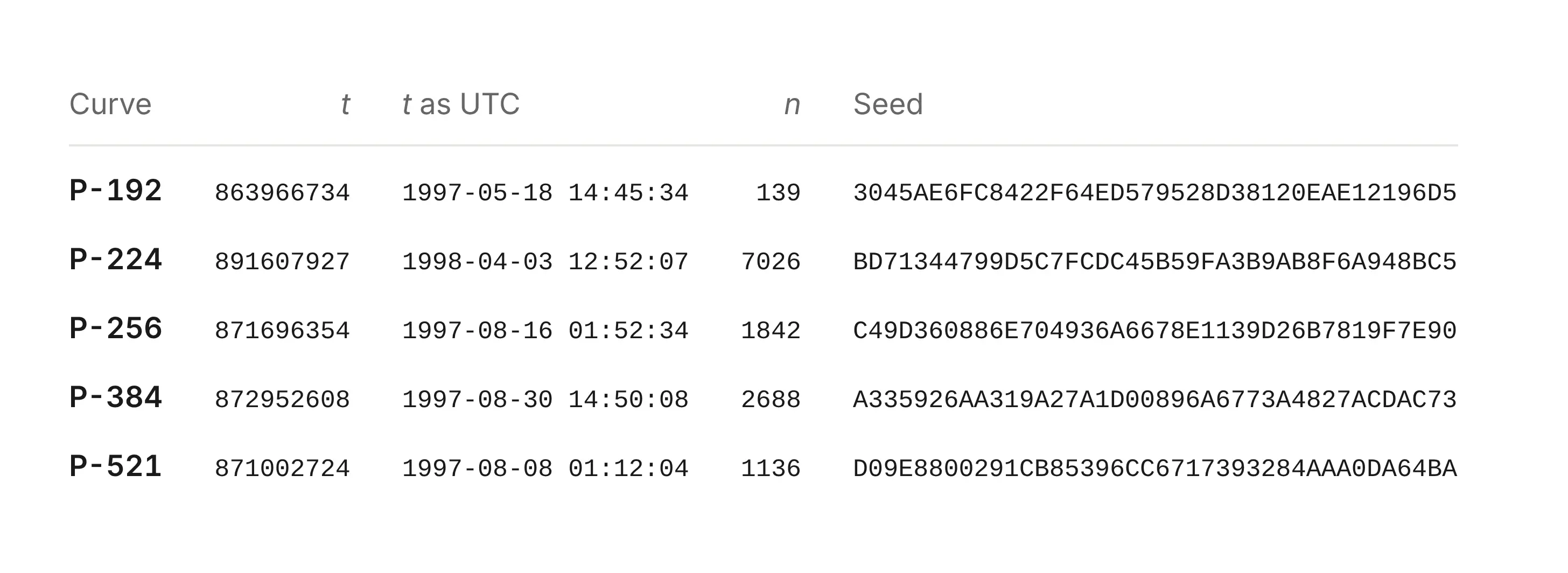
Instead of relying on hidden humorous passphrases—a long-circulating rumor in the security community—Claude deduced how 1990s C software compiled these parameters. By examining bit-level outputs, the AI identified signatures of lrand48, a standard linear congruential generator from legacy C libraries. Running lattice reduction algorithms on the truncated outputs revealed that every single prime-curve seed was simply derived from a Unix timestamp recorded between May 1997 and April 1998.
Dispelling Decades of NSA Backdoor Paranoia
This discovery carries profound real-world implications for global trust in web infrastructure. Because ECDSA underpins everything from web security certificates to digital asset signatures, lingering doubts about deliberate NSA tampering forced many security-conscious organizations toward alternative curves over the years. Proving that these seeds were generated using a basic pseudorandom number generator tied to system clock times virtually eliminates the hypothesis of a pre-selected backdoor. Federal engineers were not playing multi-dimensional cryptographic chess; they were simply running a basic script on their workstations.
src="https://www.anthropic.com/_next/image?url=https%3A%2F%2Fwww-cdn.anthropic.com%2Fimages%2F4zrzovbb%2Fwebsite%2Ff7bf17121dfacb0a5b39dfdcd035816fbb789874-2327x1836.jpg&w=3840&q=75" alt="Lattice reduction algorithm analysis" class="w-full h-auto rounded-2xl shadow-lg border border-black/10 dark:border-white/10 object-contain max-h-[550px] mx-auto block" loading="lazy" /Lattice reduction algorithm analysisA Turning Point for Automated Cryptanalysis
Beyond easing trust issues in legacy standards, Anthropic’s research highlights a major evolution in how automated reasoning handles historic mathematical puzzles. Claude did not just brute-force possible text strings; it reasoned backward through historical software constraints, recognized statistical anomalies in bit arrangements, and automatically applied lattice reduction techniques. This demonstrates that modern AI models can serve as proactive cryptographic auditors, identifying subtle structural flaws or verifying legacy standards faster than human security researchers ever could.
src="https://www.anthropic.com/_next/image?url=https%3A%2F%2Fwww-cdn.anthropic.com%2Fimages%2F4zrzovbb%2Fwebsite%2Fe8e7bb885a5e83cbcfe80e5b25f5ef7203c558ba-2912x1016.png&w=3840&q=75" alt="State recovery timeline" class="w-full h-auto rounded-2xl shadow-lg border border-black/10 dark:border-white/10 object-contain max-h-[550px] mx-auto block" loading="lazy" /State recovery timelineUltimately, while this discovery does not require system administrators or software engineers to alter their current security setups, it offers immensely satisfying closure. The web's foundational trust mechanisms were not compromised by secret agency tricks, but rather built on standard 1990s system clocks. More importantly, it signals an era where AI-driven analysis will routinely shed light on software history's darkest, unsolved corners.